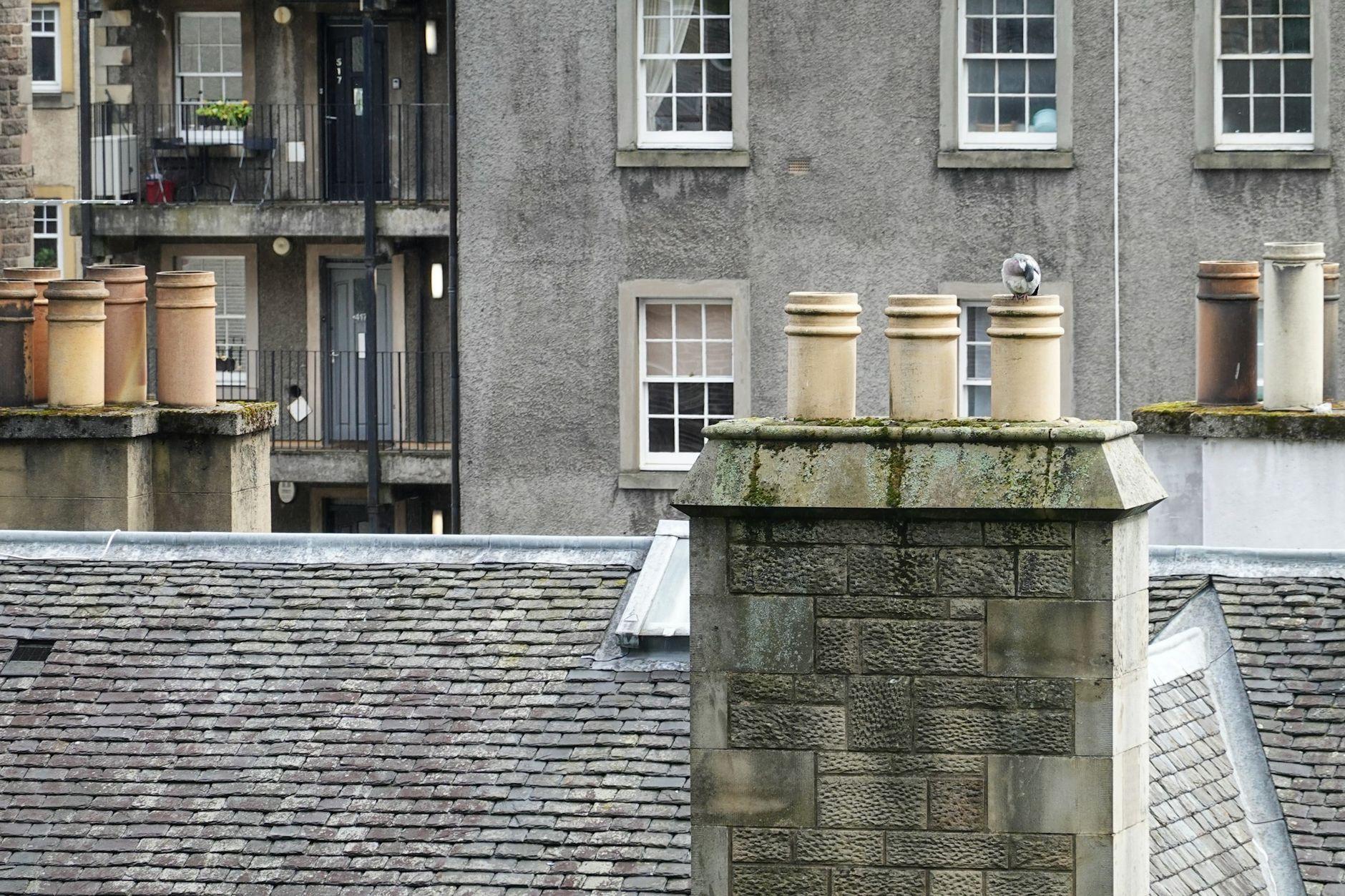
Of every part of a brick chimney, the slab across the top has the hardest life. It bakes through a Placentia summer, soaks up winter storms and sits at the point that sways furthest when the ground shakes. Once it cracks, rain goes straight into the brick below, and that is how a small job at the top turns into masonry work further down. This post covers why crowns fail here, the two kinds of repair, what moves the cost, and what we price alongside it.
How crowns fail on chimneys here
- Shrinkage. A mix poured too wet pulls apart as it cures, leaving fine cracks that widen each year.
- Heat. The clay tile through the middle swells when the fire is going. A slab poured tight against it gets pushed from inside and splits around the tile.
- No slope. Some tops were troweled flat, so puddles sit on them after every storm and soak in.
- Shaking. The stack flexes and the stiff slab on top breaks across, often in a straight line from the tile to the edge.
- Flush edges. A top that ends level with the brick lets water run down the chimney face and into the joints.
The two kinds of repair
Patch and coat. A slab still in one piece with fine cracks can be saved. The cracks are opened, filled, and the whole top gets a sealant made for crowns that stays flexible as the masonry warms and cools. It is the smaller job and suits a crown that is sound underneath.
Replace. A slab broken through, loose, flat or too thin to hold comes off down to the top course of brick. A new one is cast in a form, pitched so water runs off, wider than the brick below, and held apart from the flue tile by a soft joint so heat and shaking do not crack it again.
Which one fits is a judgement made on the roof, with a hand on the slab, not from a photo taken from the yard.
What decides the price
- Size of the top. How wide the stack is, and whether it carries one tile or several.
- Height and pitch. A tall stack on a steep roof needs more setup to work on safely.
- The brick under it. If the top courses are loose, they get relaid before a new crown goes on, and that is masonry work with its own line in the scope.
- A cap. A cap keeps rain off the middle of the new slab and out of the flue. Ours are quoted after we measure.
- Flashing at the base. If water is also getting in where the chimney meets the roof, it makes sense to fix both on the same trip.
Crown repair itself has no published figure on our site, because those facts swing it. We price it once we have looked at the top. To get that started, use the quote form and tell us whether bits of concrete have turned up in the gutter or on the roof, and whether the brick below the top looks stained or flaky. We set the visit from that and send a written scope afterwards.
Why a crack after a quake gets the camera first
The slab on top is the stiffest piece of the highest part of the chimney. In a shake it often breaks first, and that fresh crack may be the only outside sign that the stack moved. When we see one on a Placentia chimney after a felt quake, we recommend a Level 2 inspection of the flue, at $400, before the crown is touched. A neat new crown over split tile hides the problem from the next buyer and the next inspector rather than solving it.
If the camera does find damage below, the crown becomes part of a bigger scope. Our posts on rebuild pricing and bracing versus rebuilding explain how that scope is built.
What we will not do
We will not pour a new crown over loose top courses, because the new slab ends up resting on brick that is already moving. We will not seal a crown that has broken through, because the coating bridges the crack for a season and then splits along the same line. And we will not quote a crown from the ground when the roof is walkable, because the slab often looks better from below than it is.
What else gets checked while we are up there
A crown visit is also a look at everything around it:
- the cap and its screen, if there is one;
- the mortar in the top few courses;
- the tile poking through the crown, for chips and cracks;
- the metal where the chimney meets the roof;
- any gap opening between the stack and the wall.
Anything we find goes in the same scope with its own price, so you can decide what to do now and what can wait. The chimney cap, flashing repair and waterproofing pages describe those jobs, and the crown repair page covers the service in full.
Crowns around north Orange County
Placentia, Yorba Linda, La Habra and Anaheim see long hot summers and short wet winters, which is hard on a slab of concrete sitting in the sun. Many chimneys here went up decades ago with crowns that were never built to last that long. Replacing one is a modest job compared with the brickwork a leaking crown eventually causes.
Ready for a crown scope
Our contact page is the place to start. Send the address and a line on what looks wrong up at the crown; we come out, check the crown by hand and leave you a written scope with a price.
Seen Something Like This at Home?
Cordell Chimney Works works from Placentia on cracked flues, loose stacks, worn mortar and rebuilds. Use the contact form to describe where the damage is.